A Great Night in the Fillmore
-
February 23, 2010
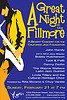
A Great Night in the Fillmore: First Bay Area fundraiser for the California Jazz Foundation features a stellar lineup
This past Sunday, several of the Bay Area's Jazz luminaries came together at Yoshi's San Francisco in support of the California Jazz Foundation. It was a night that will be remembered for many years to come.
I know all too well how difficult it is to gather more than five or six musicians in the same room on the same night. These days we seem to gather more frequently on solemn occasions than happy ones so it was a delight to be present in the lighthearted atmosphere that prevailed all evening. There were many, many wonderful performances that evening - John Handy was brilliant as always, Kenny Washington crooned beautifully on "In A Sentimental Mood." As we like to say, folks were burning down the walls. did I mention the great Bobby Hutcherson? I could go on and on - I think I will.
The evening's hostess was none other than Rita Moreno and our M.C. was the illustrious Chuy Varela from KCSM, FM. Noel Jewkes was in the house as were Eddy Marshall, Wayne Wallace, Tuck and Patti, Vince Lateano, Denny Zeitlin, Claire Dee, Roberta Donnay, Destiny Muhammed, Paul van Wageningen, David Belove, Murray Low, Michael Spirro, Larry Dunlap and on and on. (forgive me if I left anyone out)
Sitting ring side was vocalist Denise Perrier and throughout the room were assorted members [Ruth Davies, Tammy Hall,Peter Fitzsimmons] of the Bay Area music scene. I thank my lucky stars that I could return to my old neighborhood on such a night and reflect upon 42 years as a musician in the Bay Area. It was truly a great night - Linda Tillery.
CD Release Concert
-
January 21, 2010
On January 16, 2010 the CHC celebrated the release of our 4th recording, "STILL WE SING, STILL WE RISE. The concert was held at the Montclair Women's Cultural Arts Club in Oakland. To say it was a great success is an understatement!! We delivered nearly two hours of music to the delight our our sold out audience.
We were joined that might by guitarist Camilo Landau, spoken word artist Rico Pabon and vocalist Tammi Brown. There were plenty copies of the new CD on hand and they were selling like hot cakes!!
This weekend we'll rev up again and take our new show down to Santa Cruz, CA (Soquel) for another CD release concert and to celebrate the birthday of Dr. Martin Luther King Jr. Inner Light Ministries will be the site of this performance and we hope to see you there.
New CD Release!
-
December 9, 2009
Get your groove on and embark on a highly spirited and illuminating journey that celebrates the rich musical heritage of the African diaspora. Linda Tillery and the Cultural Heritage Choir announce the release of a new CD titled “Still We Sing, Still We Rise.” It contains plantation romps like “Little Rosie”, a funky remake of Bob Marley’s “Get Up, Stand Up” and the satirical Cuban classic, “Si Dios Fuera Negro.” (If God Were Black) If you love great singing and drumming, “Still We Sing, Still We Rise.” will be a must have for your CD collection.
Linda Tillery and the Cultural Heritage Choir have been performing together since 1992. Now, on the eve of their 18th anniversary, the CHC is set to release its fourth recording, “Still We Sing, Still We Rise.”
Release date: January 12, 2010 Available at CDBaby.com, iTunes, Amazon.com and www.culturalheritagchoir.com